
Family-owned · Minneapolis Local
Productivity Habits Worth Keeping
The small decisions made before the first can opens that determine how the day goes.
Free estimate
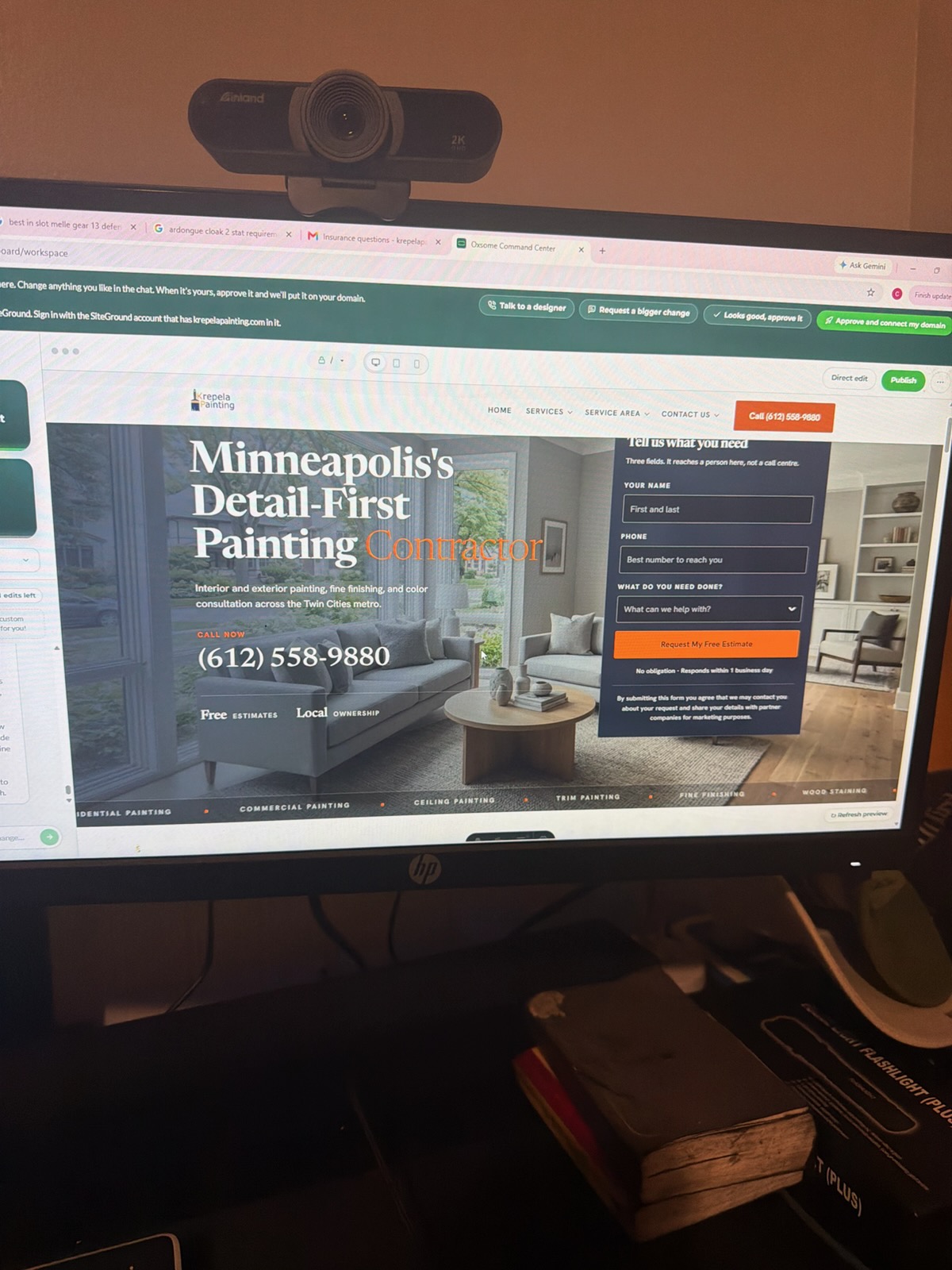
Tell us what you need
Three fields. It reaches a person here, not a call centre.
What actually moves a painting day forward
Most painting days don't fall apart on a big mistake. They fall apart in the gaps, the half hour lost looking for a drop cloth, the lunch break that stretched, the job that wasn't prepped when the crew arrived. The work itself is straightforward. The logistics around it are where time goes.
Colin has been working through what makes a painting project run cleanly versus what makes it drag. Some of it is obvious in retrospect. Some of it took longer to learn. What follows are the habits that have stuck. Not because they sound good, but because the days they're skipped are noticeably worse.
If you're curious how that thinking shows up in the finished work, the portfolio gives a better read than anything written here.
Prep is the whole job Prep
The time spent before a brush touches the wall determines almost everything that comes after.
Habits
Decisions that hold up across a full week Decisions
Stage everything the night before
Ladder, drop cloths, brushes, tape, the right primer for the substrate. If you're hunting for it at 8 a.m., the morning is already behind.
One task to completion before starting the next
Splitting attention between cutting in and rolling looks like progress. Usually it means both get done halfway, and you come back to fix the edges twice.
Write the list on paper
Not a phone note that disappears under notifications. A physical list you cross off. The act of crossing it off is underrated.
Know when the light changes
On exterior jobs especially, certain walls lose good light by early afternoon. Sequence the work around the light, not around preference.
Leave the site cleaner than you found it
This isn't about appearances. A clean site at the end of the day means the next morning starts with clarity instead of cleanup.
The longer view
Efficiency and fine work aren't opposites fine work

Our Process
Consistent process, flexible sequencing
Every project that comes through Krepela Painting, whether it's a residential repaint, a commercial space, or detailed trim work, follows the same underlying logic: assess the surface, prep it fully, apply in the right sequence, check it in the right light. The order of rooms or walls shifts based on the space. The process doesn't.
- 01
Assess first
Walk the full space before touching anything. Surface condition, light direction, what needs masking, what needs sanding. Make the decisions before the clock is running on materials.
- 02
Prep without shortcuts
Holes filled, surfaces clean, edges masked. The coat that goes on a properly prepped wall looks better and lasts longer. This isn't negotiable.
- 03
Apply in sequence, check in good light
Cut in, then roll. Check coverage before moving on. Catching a thin spot at 2 p.m. is a ten-minute fix. Catching it after the tape is pulled is a return visit.
Start your project
The work speaks louder than a productivity post.