
Family-owned · Minneapolis Local St. Paul Call or text (612) 558-9880
Krepela Painting

Family-owned · Minneapolis Local

Door Painting Done Without the Overlap Marks Most Painters Leave

Interior doors, exterior doors, and front-door refinishing across the Twin Cities metro, sequenced the way panel doors actually need to be painted.
Door Painting Done Without the Overlap Marks Most Painters Leave

Free estimate

Tell us what you need

Three fields. It reaches a person here, not a call centre.

No obligation · Responds within 1 business day


By submitting this form you agree that we may contact you about your request and share your details with partner companies for marketing purposes.

Updated October 2026

What good door painting actually takes

Krepela Painting does door painting across the Twin Cities metro: interior doors, exterior doors, and front-door refinishing, done without the lap marks and gummy edges a rushed job leaves behind. A panel door has six or more surfaces that meet at corners, so order matters. Colin Krepela handles each job himself and paints the panels, rails, and stiles in the sequence that keeps every surface wet until the whole face is laid off. Request a free estimate from Krepela Painting.

What drives the scope on a door job is less about the paint and more about what is under it and what the door is up against. An interior bedroom door that just needs a fresh coat is a different job than a weathered south-facing front door that is chalking and splitting at the bottom rail. We assess each door on site: whether the old finish is sound enough to recoat, whether the surface needs to be deglossed or stripped, and on exterior doors, whether the wood itself has started to fail. Every job is different, contact Krepela Painting for an accurate estimate.

Why doors fail faster than walls, and how we stop it

A door is the most-touched, most-flexed, most-weathered surface in the house. It gets prepped like one.
Most door-painting failures are not a paint problem. They are a sequence-and-prep problem. A door gets more hand contact, more slamming, and on the exterior more sun and freeze-thaw than almost any surface in the house, so a coat that was not deglossed, filled, and laid off in the right order starts failing at the edges within a season. Colin treats each door as its own small cabinet-grade job: knock down the sheen so the new coat can grip, fill the dents and old hardware holes, caulk nothing that moves, and then paint the panels, rails, and stiles in an order that keeps a wet edge the whole way across. That is the difference between a door that looks sprayed and one that looks brushed over. The same prep standard we hold on trim painting applies here, because a door is really just trim you open and close a few thousand times a year.
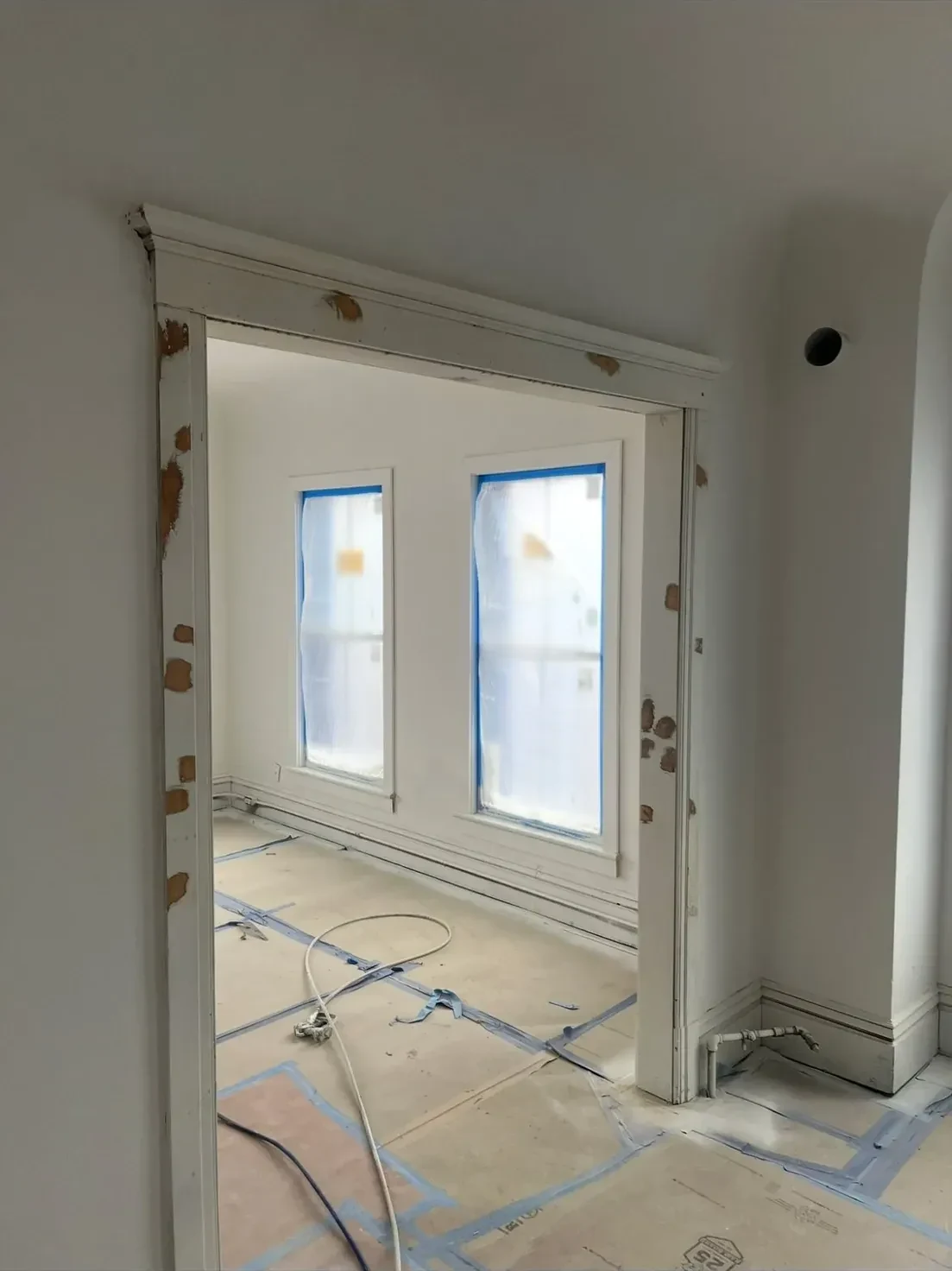
Interior door and casing freshly painted in a clean white finish inside a Twin Cities home

What's Included

Interior, exterior, and front-door painting, all under one scope

  1. 01

    Interior door painting

    Bedroom, closet, bathroom, and hallway doors repainted or color-changed. We take the door off the hinges when it makes sense, so the top and bottom edges actually get sealed instead of skipped. Interior door painting is where a clean, factory-looking finish matters most, because these doors sit at eye level and get touched daily, the same standard that carries through the rest of our interior painting work.

  2. 02

    Exterior door painting

    Back doors, side-entry doors, and garage-to-house doors that take weather on one face and climate control on the other. Exterior doors move with the seasons, so the prep and the product have to account for expansion the interior side never sees, the same way our exterior painting is built for Minnesota's freeze-thaw.

  3. 03

    Front door painting

    The front door is the one everyone sees and the one Minnesota weather punishes hardest. Front-door painting and refinishing covers stripping failing finish, addressing sun-bleached and peeling areas, and recoating in a durable, UV-tolerant finish that holds its color through a Twin Cities summer and winter.

  4. 04

    Wood repair before refinishing

    When a walkthrough turns up rot at the bottom rail or a split panel on an exterior door, we have an in-house carpenter who repairs or replaces the bad wood before any finish goes on. You are not left coordinating a separate carpentry contractor before the door can be painted. Exterior wood door refinishing on an older door almost always includes some of this.

Our Process

How a door gets painted so the seams disappear

Three steps, in the right order. On a panel door the order is not a preference, it is the difference between a clean face and a visibly patched one.

  1. 01

    Degloss, fill, and prep

    Every door gets inspected, deglossed, and filled before paint. Old hardware holes, dents, and dings get filled and sanded flush. Glossy old enamel gets scuffed so the new coat can bond, because latex over untouched oil enamel peels in sheets within a year.

  2. 02

    Prime where it counts

    Raw wood, filled repairs, and bare spots get a bonding primer so the finish coat lays flat and the sheen stays even from panel to rail. On a door with a known adhesion history, primer is not optional.

  3. 03

    Paint in the right sequence

    Panels first, then the horizontal rails, then the vertical stiles, laid off top to bottom while every edge is still wet. That order is the whole game on a panel door. It is what keeps the overlaps from telegraphing through the finish coat.

The Technique

How to paint a panel door without overlap marks
Finished painted door and trim showing smooth, even sheen with no visible brush overlap
The single most common question on door painting is how to paint a panel door without overlap marks, and the honest answer is that it is 90 percent sequence and 10 percent product. You paint the recessed panels first, including the small molded edges around each one. Then you paint the horizontal rails, the top, middle, and bottom crosspieces. Then the vertical stiles last, running the brush the full height in one pass so the stiles cover the ends of the rails cleanly. The trick is speed: on a six-panel door you have to keep a wet edge across the whole face, so you work the whole door in one go rather than letting half of it set up. Where two wet surfaces meet, you lay off in the direction of the grain so any slight ridge falls in line instead of across it. Done this way, the finished door reads as one continuous surface instead of a grid of brushed rectangles. For a door with a glass insert or decorative molding, the fine finishing standard carries straight over.

Picking the right finish for each door

01

Satin on interior doors

The go-to for most interior doors. Satin cleans up with a damp cloth, hides minor surface variation better than a glossier sheen, and still wipes free of the fingerprints doors collect. For best paint sheen for interior doors, satin or semi-gloss is almost always the right call over flat, which marks the moment anyone touches it.

02

Semi-gloss on high-contact doors

Standard where a door takes real abuse: bathroom doors, kitchen-adjacent doors, kids' room doors, and the garage-to-house door. Semi-gloss is the most scrubbable sheen and the traditional choice on doors in older Twin Cities homes.

03

Durable enamel on exterior doors

Front and exterior doors need a finish built for UV and temperature swing, not just a pretty sheen. We use a durable exterior-rated enamel so a south-facing door holds its color and does not chalk or fade by the end of one Minnesota summer.

Exterior wood door refinishing for older Twin Cities homes
Exterior wood door refinishing is its own discipline, especially on the older housing stock across South Minneapolis, Northeast, and the Longfellow neighborhoods, where original wood doors are common and worth saving. A south or west-facing front door takes direct sun for hours, and Minnesota's freeze-thaw cycle works moisture into any crack in the finish, so the bottom rail and the lower panels are usually where a door starts to go first. Refinishing one of these means stripping the failed finish back to sound material, letting the wood dry, addressing any soft or split wood with our in-house carpenter, priming, and recoating in a finish rated to hold up outdoors. When a weathered door is still structurally sound, refinishing it almost always beats replacing it, both on cost and on keeping the character of an older home intact.
Exterior door and trim repainted on an older Twin Cities home with a clean, weatherproof finish

When NOT to paint the door

Here is the honest part most painters skip. Door painting is not always the right call. If your exterior door has rot that runs through the core of the rails or the panels are delaminating and crumbling, no finish will save it, and a repaint on a structurally failing door is money spent twice. In that case replacement is the right answer, and we will tell you so rather than sell you a coat of paint that buys a few months. Same goes for a hollow-core interior door that has been punched through or warped past square: a new door is cheaper than the hours it takes to make a failed one presentable. We would rather lose the painting job than take your money for a door that should be replaced. Call Colin at (612) 558-9880 and he will give you a straight read on whether the door is worth painting or worth replacing.
Interior door and casing freshly painted in a clean finish inside a Twin Cities home

Start here

Get a door-painting estimate

Tell us how many doors, whether they are interior or exterior, and what shape the front door is in. We will put together an accurate estimate with no pressure. Or call (612) 558-9880 to talk it through.

(612) 558-9880

Or send it in writing

Three fields, thirty seconds

No obligation · Responds within 1 business day


By submitting this form you agree that we may contact you about your request and share your details with partner companies for marketing purposes.

What sets Krepela Painting apart on door work

  1. 01

    Colin does the work

    Colin paints the doors himself, so one person owns the result and the standard does not change from door to door.

  2. 02

    The edges nobody else seals

    Doors come off the hinges when the job calls for it, so the top and bottom edges get sealed. Those two edges are where moisture gets into a door, and they are the two most painters skip.

  3. 03

    Clean reinstall and walk-through

    Hardware comes off, hinges get masked, and the door goes back on true. You check the finish while we are still there, and if a panel does not meet the standard we discussed, we fix it on the spot.

Areas We Serve

Proudly serving the Twin Cities metro, from Edina and St. Louis Park to Roseville, New Brighton, and the Minneapolis neighborhoods. Happy to travel beyond that depending on the job, just ask.

Door Painting FAQs

Why is the paint on my front door peeling?
Front-door paint peeling almost always traces back to two things in this climate: sun and moisture getting under a finish that was not prepped right. A south or west-facing door takes hours of direct UV, which breaks down the finish, and Minnesota's freeze-thaw cycle then drives moisture into any crack and lifts the paint from behind. If the old finish was applied over a glossy surface that was never deglossed, or the bare edges were never sealed, it peels even faster. The fix is not another coat over the peeling, it is stripping back to sound material, sealing the edges, and recoating in an exterior-rated finish built for sun and temperature swing.
How do you paint a panel door without overlap marks?
Sequence and speed. You paint the recessed panels first, then the horizontal rails, then the vertical stiles last, and you keep a wet edge across the entire face the whole time rather than letting half the door set up. Where surfaces meet, you lay off in the direction of the grain so any slight ridge falls in line instead of across it. The stiles go on last and in full-height passes so they cover the ends of the rails cleanly. Done in that order, the finished door reads as one continuous surface instead of a grid of brushed rectangles.
Should I repaint or replace a weathered exterior door?
It depends on the wood, not the finish. If the door is structurally sound and the problem is a failed or peeling finish, refinishing it is almost always the better call, both on cost and on keeping the character of an older home. If there is rot running through the rails, panels that are delaminating, or a door that has warped past square, replacement is the honest answer, and a repaint only buys a few months. On exterior doors we assess the actual wood first, and if a soft board can be repaired, our in-house carpenter handles it before we refinish. We will tell you which way the math points before you spend anything.
Is exterior wood door refinishing the same as painting an interior door?
No. They share the same prep discipline, degloss, fill, prime, and paint in sequence, but an exterior door has to account for things an interior door never sees. It expands and contracts with the seasons, takes direct UV on one face, and has to shed moisture, so the finish has to be a durable exterior-rated enamel and the edges have to be sealed to keep water out. On older wood doors, exterior refinishing also often means stripping a failing finish and addressing weathered or split wood before any new coat goes on.
Can you change the color of my doors, not just refresh them?
Yes. Color changes on doors are common, a dark front door, black interior doors, or matching new doors to existing trim. Because doors sit at eye level and get touched constantly, a color change needs full prep and usually a primer coat so the new color covers evenly and does not flash where the old color shows through at the edges. Colin also offers color consultation in person or virtually if you are undecided, so you can see how a door color reads against your walls and trim before anything is painted.
Do you take the doors off to paint them?
When the job calls for it, yes. Taking a door off the hinges lets us seal the top and bottom edges, which are the two edges most painters leave bare and the two where moisture gets into the wood. It also lets the door lay flat so the finish levels out without runs. Some doors are better painted in place to keep the house secure, and we make that call per door. Either way the hardware comes off, the hinges get masked, and the door goes back on true.

Ready for doors that look new, not recoated

Colin Krepela handles door painting across the Twin Cities metro himself.

Related

Call Free estimate