
Family-owned · Minneapolis Local
Epoxy Flooring for Garages, Basements, and Restaurant Kitchens
Garage and basement slabs plus restaurant kitchen floors, ground and coated so they hold up to road salt, moisture, and daily traffic.
Free estimate
Tell us what you need
Three fields. It reaches a person here, not a call centre.
Updated October 2026
Why an epoxy floor lives or dies on the slab prep
Epoxy flooring is what a Twin Cities garage, basement, or restaurant kitchen needs when the bare concrete can no longer take the abuse it gets: road salt dragged in off the street all winter, moisture pushing up through the slab, and tire or foot traffic that wears raw concrete to dust. Krepela Painting grinds and profiles the slab first, checks it for moisture, and only then lays down a coating, because an epoxy floor fails from the concrete up, not from the bucket. Colin Krepela does the prep and the coating himself, so the floor by the overhead door matches the floor at the back of the bay. Request a free estimate from Krepela Painting and he'll tell you straight whether your slab is a candidate.
What drives the scope on an epoxy floor is the condition of the concrete, the square footage, and what the floor has to survive once it is down. A garage slab that sees studded tires and winter salt asks for a different buildup than a basement floor fighting ground moisture, and a restaurant kitchen floor has to meet the non-porous, cleanable standard a Minnesota health inspection looks for. Twin Cities basements, especially in homes built before 1970, were often poured as bare slabs with no vapor barrier under them, which is why moisture testing comes before any coating decision. Every floor is different, contact Krepela Painting for an accurate estimate.
Why Prep Decides It
An epoxy floor fails at the slab, not in the bucket
Grinding and moisture testing are the reason a coating holds through a Minnesota winter.
What epoxy flooring covers
Garage Floors
The slab that takes the worst of a Minnesota winter: road salt, meltwater, and studded tires. A ground-and-coated garage floor sheds all of it, wipes clean, and stops the concrete from dusting onto everything you store out there.
Basement Floors
A basement slab is usually bare concrete fighting ground moisture from below. We test it first, then coat it so the floor reads as finished living space instead of raw gray concrete. Where the moisture is high, mitigation comes before the color coat.
Restaurant & Commercial Kitchen Floors
Restaurant kitchens, prep areas, and walk-ins need a floor that is non-porous, seamless at the base, and slip-resistant, the surface a Minnesota health inspection is looking for. We coat it to clean up fast and hold under hot grease, carts, and constant foot traffic.
Flake and Broadcast Finishes
Decorative flake broadcast into the wet coat hides minor slab imperfection, adds grip underfoot, and gives a garage or basement floor a finished, speckled look instead of a flat solid color. We set the flake density to the look you are after.
Moisture Mitigation
If a moisture test comes back high, a standard epoxy will not bond and will not stay down. We address the moisture with the right primer or mitigation system first, because coating over a damp slab is the single most common reason these floors fail.
The Process
How an epoxy floor job actually runs
- 01
Grind and Profile
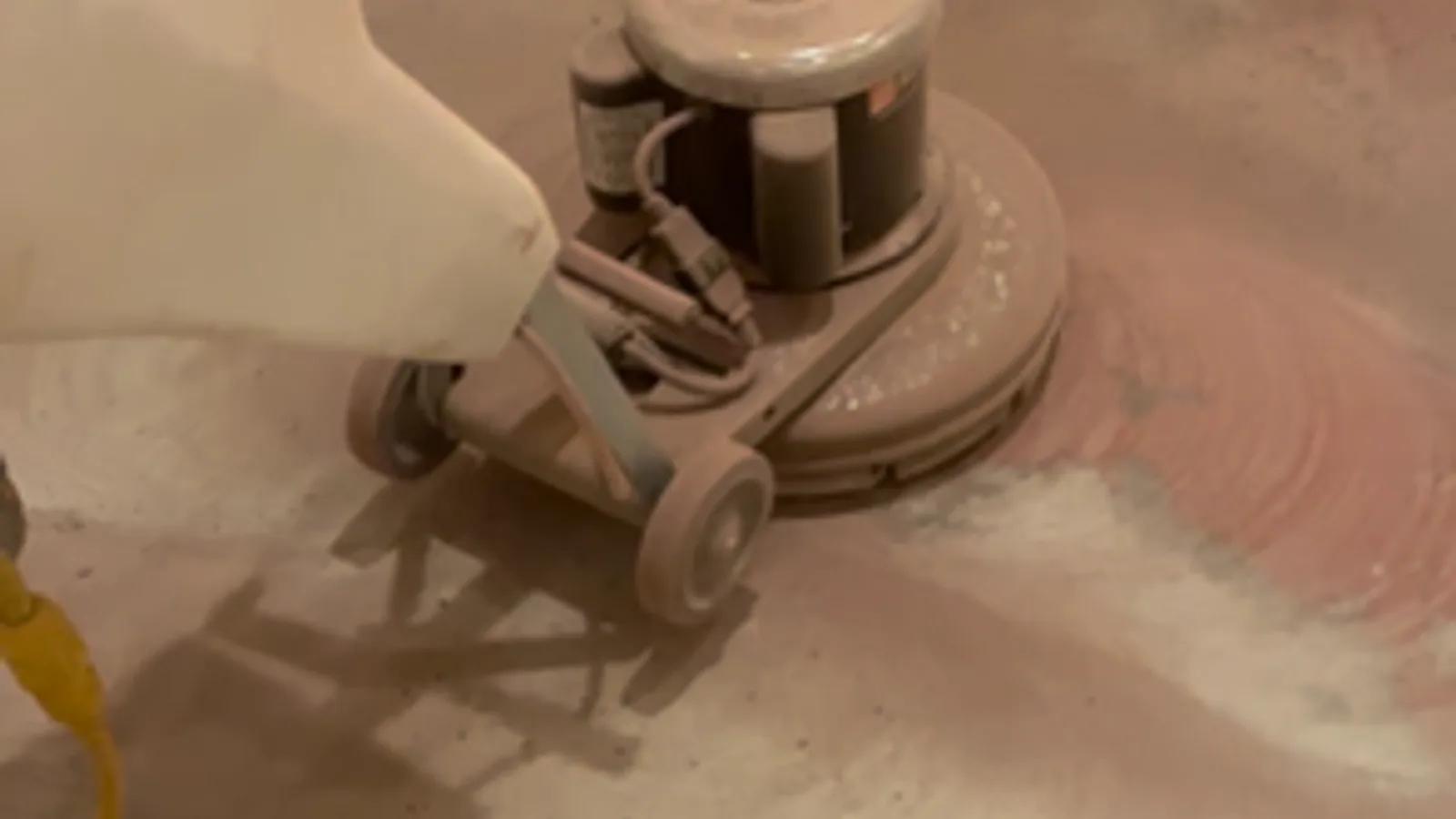
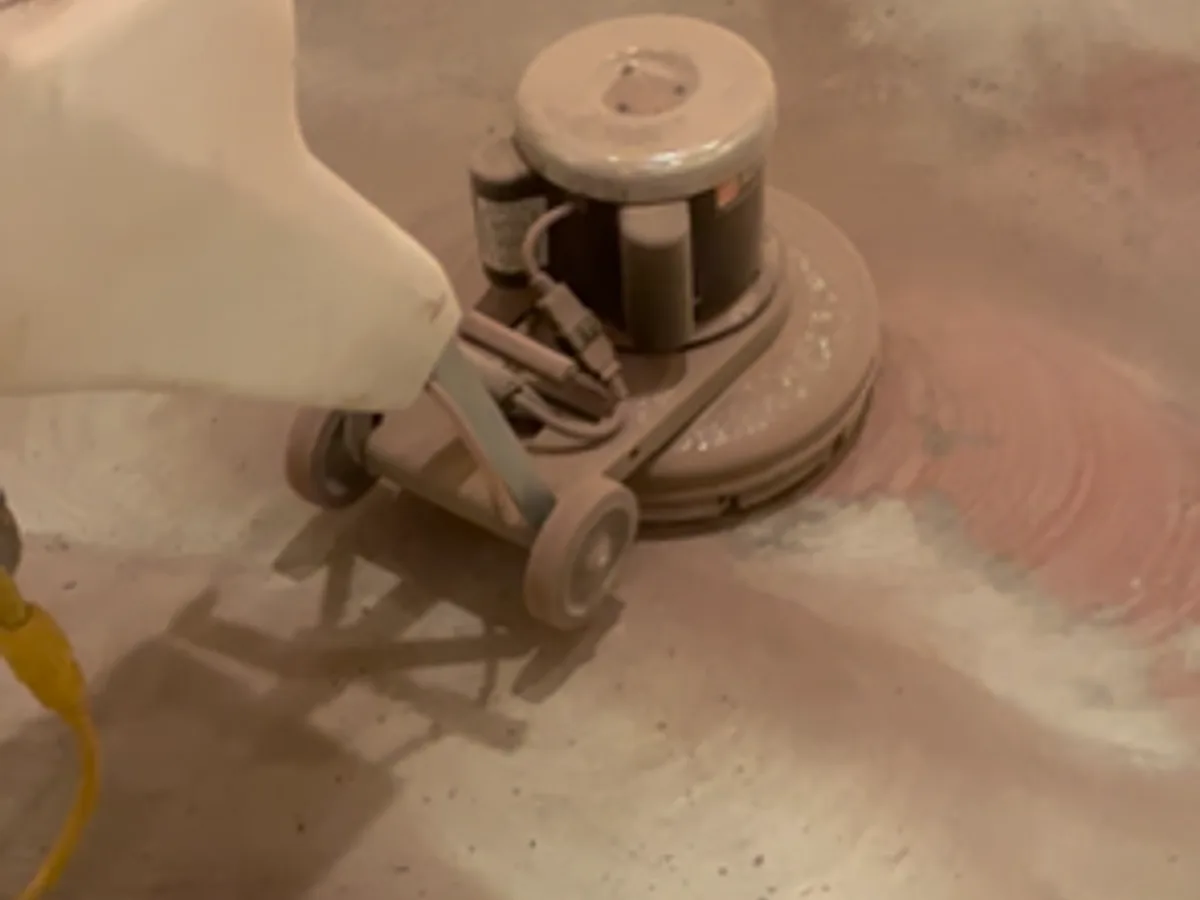
The slab gets mechanically ground with a floor machine to open the surface and strip any old sealer, paint, or glue. This is what gives the epoxy a profile to bond into. A coating laid over slick concrete has nothing to hold onto.
- 02
Repair, Test, and Prime
Spalls, pits, and cracks get patched, and the slab gets a moisture test. Bare and repaired areas get the right primer. If the moisture reads high, that gets handled here, before any color coat is considered.
- 03
Coat and Topcoat
The epoxy base coat goes down, flake is broadcast if that is the finish you chose, and a clear topcoat seals and protects it. Each coat gets real cure time before the next, and before you park on it or roll a cart across it.
Matching the epoxy system to the floor
Start here
Not sure if your slab is ready for epoxy?
Tell us the room, the square footage, and what the floor has to put up with. Colin will take a look and give you a straight read on whether your slab is ready for epoxy or needs work first. Prefer to talk it through? Call (612) 558-9880.
(612) 558-9880Or send it in writing
Three fields, thirty seconds
What sets Krepela Painting apart on epoxy floors
- 01
Colin does the work
Colin does the prep and the coating himself, which is the only way the floor stays uniform from the door to the back wall.
- 02
Prep is not negotiable
Grinding and moisture testing are not line items to trim when a quote gets tight. They are the reason the floor holds. We do not skip them to come in lower than the painter who rolls epoxy over a sealed slab.
- 03
Straight answers on moisture
If the slab is too wet or too far gone for a coating to hold, you hear it before you pay for it. An honest no on a bad slab is worth more than a floor that peels by spring.
Epoxy flooring questions we actually get asked
Do you have to grind the concrete before applying epoxy?
Can you put epoxy over a Minnesota basement floor that gets damp?
Will a garage epoxy floor hold up to road salt and winter?
Can you do epoxy flooring for a restaurant kitchen?
How long before I can walk on or park on a new epoxy floor?
Epoxy flooring across the Twin Cities metro
Proudly serving the Twin Cities Metro area. Happy to travel beyond that too, depending on the job, just ask!
Get an epoxy floor that holds through a Minnesota winter
Colin Krepela grinds and coats epoxy floors across the Twin Cities metro, and he is the one running the machine.