Family-owned · Minneapolis Local
Industrial Painting and Protective Coatings Across the Twin Cities
Rust coatings, metal surface painting, waterproof barrier coatings, and industrial-grade finishes built to hold on hard-use surfaces.
Free estimate
Tell us what you need
Three fields. It reaches a person here, not a call centre.
Updated October 2026
What industrial painting actually requires on a hard-use surface
Industrial painting is a different discipline than painting a home, and getting it wrong is expensive: a coating that was specified for the wrong substrate, or applied over rust and mill scale that nobody removed, fails in a season and takes the steel down with it. Krepela Painting handles industrial painting across the Twin Cities, structural steel, railings, equipment, concrete, and masonry, matching the coating system to the surface and the way that surface gets used. Colin Krepela comes from three generations of painters and brings the same prep-first standard to industrial-grade finishes that the residential work is built on. If you manage a facility, a warehouse, or a job with metal and concrete that has to stand up to real wear, contact Krepela Painting before you hand it to whoever quotes the lowest number.
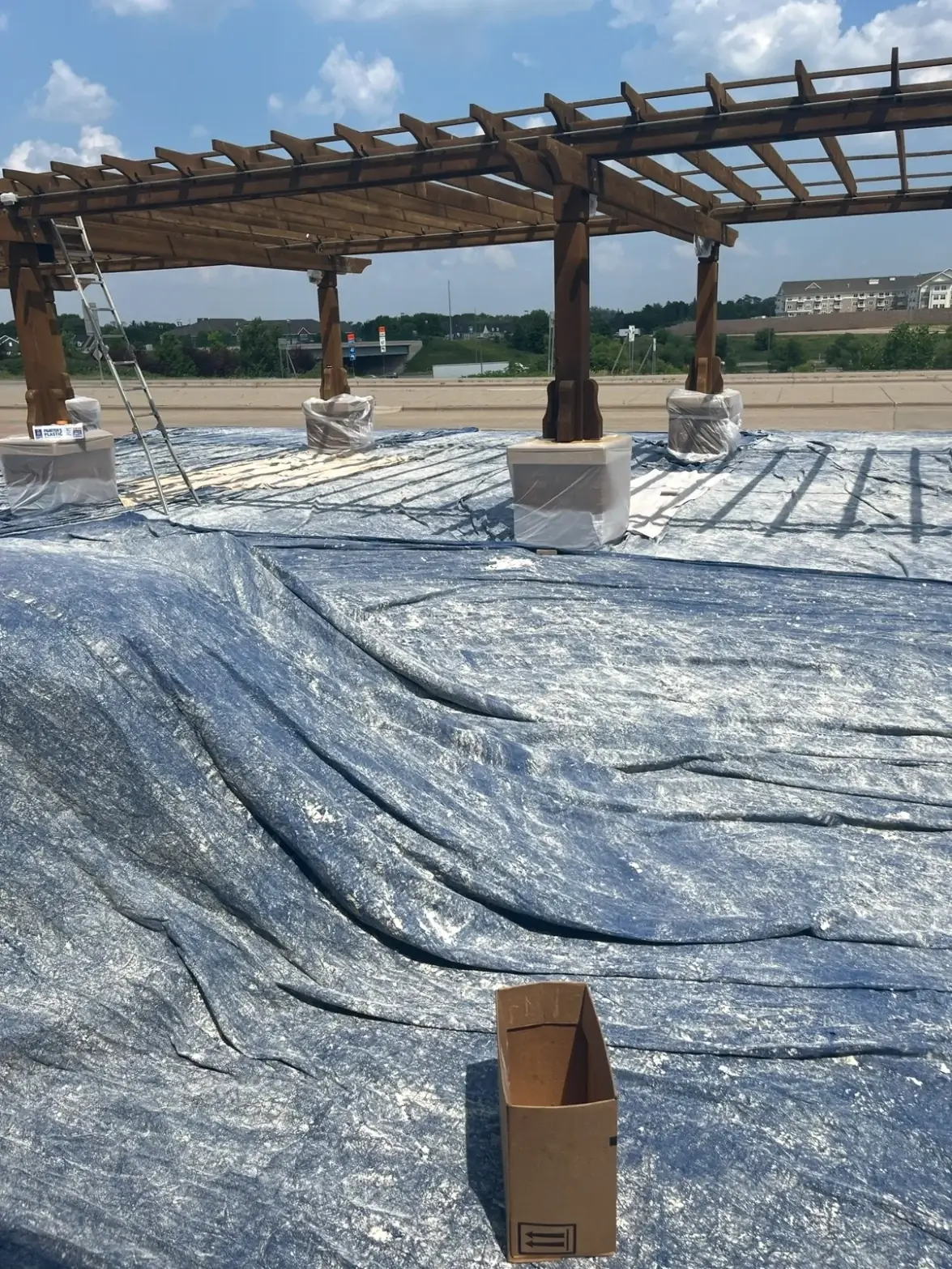
What drives an industrial coating job is the substrate and the exposure, not the square footage alone. Bare or rusting steel, chalking old enamel, a concrete foundation taking on water, galvanized metal that paint will not grip without the right primer, each of these needs its own prep and its own product. We assess the surface on site: what it is made of, what is failing, whether there is active rust or moisture, and what the surface has to survive once we leave. Then we spec the system to match, a rust-inhibiting primer under a metal topcoat, a water-barrier coating on below-grade concrete, or a high-build industrial finish where abrasion is the enemy. Every job is different, so reach out for an accurate estimate.
Our Approach
The coating is only as good as the surface under it
Industrial finishes fail at the substrate, not the topcoat. That is where the time goes.
What We Handle
Protective coatings for metal, concrete, and hard-use surfaces
Rust Coatings and Rust-Inhibiting Primers
Active rust gets taken back to sound metal and locked down with a rust-inhibiting primer so it stops spreading under the new coat instead of bleeding through it. The right primer on prepared steel is what keeps corrosion from coming back, and it is the step cheap bids skip.
Metal Surface Painting
Structural steel, railings, stairs, handrails, equipment, and metal fixtures each need a system built for metal: the correct profile, a bonding primer, and a topcoat rated for the way the surface gets handled. Galvanized and previously coated metal get the primer that will actually grip, not a general-purpose paint that peels.
Waterproof and Water-Barrier Coatings
Concrete foundations, block walls, and masonry that take on water get a waterproof barrier coating that seals the surface against moisture intrusion rather than just coloring it. The prep and the product are chosen for the water side of the problem, not the look.
Industrial-Grade Finishes
High-use floors, walls, and surfaces in warehouses and production spaces get high-build, abrasion-resistant industrial-grade finishes that stand up to traffic, cleaning chemicals, and impact. For slab floors specifically, epoxy flooring is often the right system, and we will tell you when it is.
Warehouse and Facility Coatings
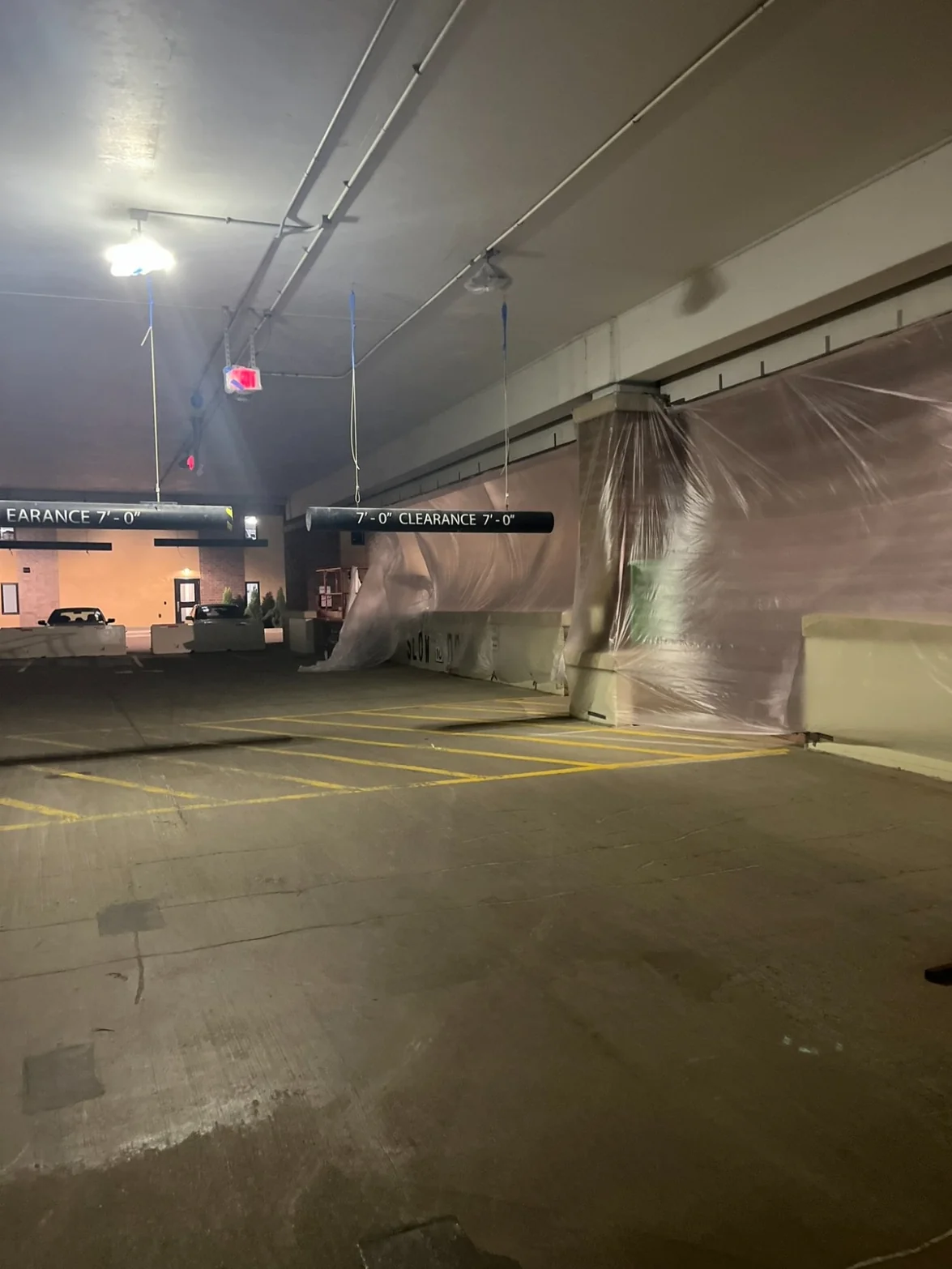
Warehouses, manufacturing floors, and light-industrial facilities where coatings and prep have to be matched to structural steel, concrete, and drywall on the same job. We coordinate around operations so the work does not shut the floor down.
Our Process
How an industrial coating gets specified and applied
Three steps, in the right order. On an industrial surface the order is not a preference, it is the difference between a coating that protects for years and one that lifts the first winter.
- 01
Clean and prep to a sound profile
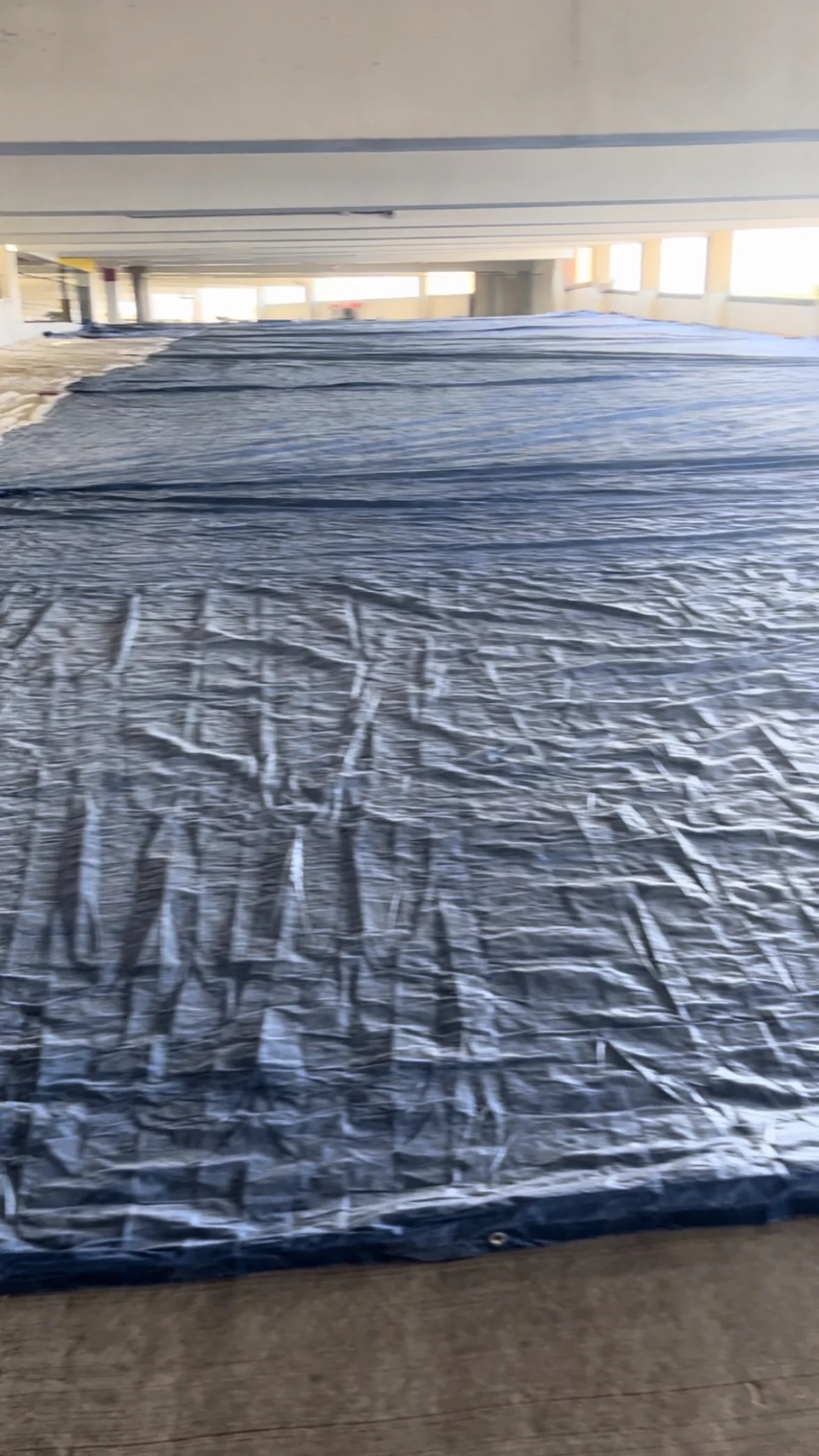
The surface gets washed and degreased, then prepped to a sound profile: sanding or abrasive prep on metal, knocking down loose and chalking old coating, and opening up concrete so the coating can bond. A coating over grease, rust, or dust has nothing to grip.
- 02
Treat rust and prime for the substrate
Active rust gets treated back to clean metal, and bare or treated surfaces get the primer built for that substrate: a rust-inhibiting primer on steel, a bonding primer on galvanized or previously coated metal, a sealer on porous concrete. The primer is matched to the material, not the color.
- 03
Apply an industrial-grade finish
The finish goes on in a film thickness rated for the exposure: a metal topcoat for weather and handling, a water-barrier coat on below-grade concrete, or a high-build industrial finish where abrasion and chemicals are the load. The product is chosen for what the surface has to survive.
Rust Coatings
Why rust has to be treated, not painted over
Waterproof Coatings
Water-barrier coatings for concrete and masonry
Coatings specified for real Minnesota industrial conditions
What sets this apart from a volume-bid crew
- 01
Colin specs and owns the work
When you hire Krepela Painting, Colin is involved in the project directly. You are not handing an industrial coating spec to a crew coordinator who has never chosen a primer for galvanized steel.
- 02
The right system for the surface
The coating gets matched to the substrate and the exposure, not to whatever is cheapest on the truck. Rust-inhibiting primer for steel, a water-barrier system for concrete, a high-build finish where abrasion is the load. The product fits the job.
- 03
Built around how the facility runs
We schedule around your operations so the work does not shut a facility or a floor down, and if a surface needs a repair before it can be coated, you hear it before we start, not after the coating fails.
Service Area
Twin Cities metro industrial and commercial coverage
Proudly serving the Twin Cities metro, from the Minneapolis and St. Paul industrial corridors to the surrounding commercial parks. Happy to travel beyond that depending on the job, just ask.
Start here
Get an industrial painting estimate
Tell us about the surface: what it is made of, what it is doing, and what it has to survive. We will assess it on site, spec the right coating system, and give you an accurate estimate. Or call (612) 558-9880 to talk it through.
(612) 558-9880Or send it in writing
Three fields, thirty seconds
Industrial Painting FAQs
What is the difference between industrial painting and regular painting?
Can you coat over rusted metal?
Do you apply waterproof coatings on concrete and masonry?
What kinds of industrial surfaces do you paint?
Do you work in occupied facilities without shutting operations down?
Do you handle both industrial and commercial painting?
Ready to get a scope and estimate on your industrial project?
Tell us about the surface and we will schedule a site visit to spec the coating.